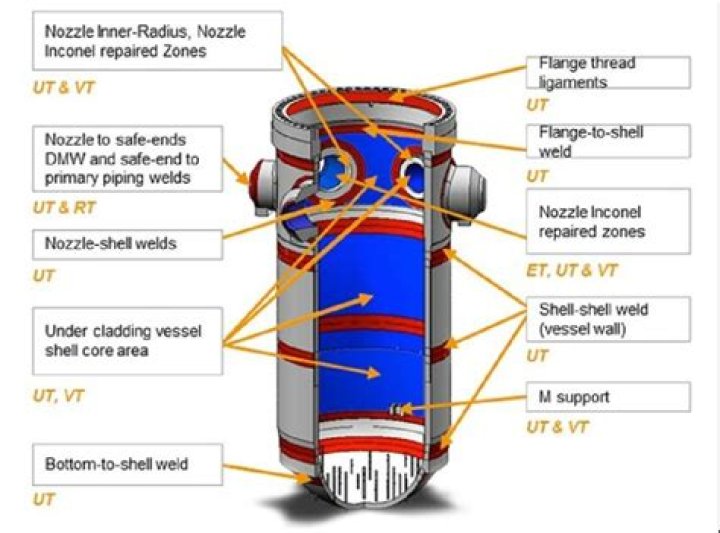
In reactors, heating and cooling jackets are used to remove heat from exothermic reactions or provide the needed heat required to produce the desired endothermic reactions. Steam jackets that operate at high pressures can pose safety issues, especially when hazardous chemicals are being used within the reactor.
How do jacketed reactors work?
A cooling liquid flows through the jacket, collecting heat energy from the outer surface of the reactor vessel and carrying it away as the cooling liquid exits at the jacket outlet. When the flow of cooling liquid through the jacket increases, more heat is removed.What is bioreactor jacket?
A jacket is a cavity external to the vessel that permits the uniform exchange of heat between the fluid circulating in it and the walls of the vessel.How many types of jackets are there in reactor?
In this post we'll talk about the two main jacket options for glass-lined reactors, including the good, the bad, and the “foul”.What is a jacketed glass reactor?
Jacketed glass reactors are designed for synthetic reaction of different types of materials in a controlled temperature and vacuum environment. Each reactor features adjustable stirring speeds and a constant pressure feeding funnel that allows you to add material to the vessel at a uniform and controlled speed.How do jacketed vessels work?
Put simply, a standard jacketed vessel introduces a secondary enclosure over a structural shell. The jacket creates a cavity to be utilized for heating and cooling management, usually by filling the space with a circulating fluid.How does a double jacket work?
In a double jacket system, a chiller is used to circulate fluid through the inner jacket, while the outer jacket is used for vacuum insulation to ensure the vessel will maintain the desired temperature.What is difference between coil and jacket?
However, a jacket has a lower heat transfer performance than a coil as there will be a lower process side coefficient, usually a greater wall thickness, and a smaller surface area. A jacket may also require a higher service side flow.Why do jackets work?
Coats keep us warm because of the material of the coat. Our body supplies the heat, and the material helps to trap body heat and keeps the heat from escaping into the air.What is annular jacket?
The annular space between the vessel wall and jacket wall is used for circulation of heating or cooling medium. Plain jackets are suitable for small capacity vessels and for operations where pressure inside the vessel is more than twice the jacket pressure.What is a jacketed pressure vessel?
Jacketed pressure vessels are pressure vessels with a secondary pressure enclosure, installed on the shell or the dished heads of a pressure vessel in order to provide heating or cooling of the vessel contents.How do you control the temperature of a reactor?
To control the temperature of a reactor, the temperature control system continuously pumps the heat-transfer liquid through the jacket of the reactor. Sudden changes in temperature within the reactor are dynamically balanced by rapid heat-up or cool-down.What are bioreactors used for?
Bioreactor systems are a vital component in the process of 3D tissue engineering and the formation of tissue constructs. Bioreactors are used to provide a tissue-specific physiological in vitro environment during tissue maturation. Based on the bioreactor technology, various tissue systems can be incubated in vitro.What is a jacket CSTR?
Continuously stirred tank reactors (CSTRs) with a recirculating jacket heat transfer system may have more interesting dynamic behavior than the classical representation of a "once through" jacket.What is jacketed heating?
Jacketed heating is widely used in process plants to heat devices such as tanks, kettles, dryers, reactors and glass-lined vessels that operate at temperatures up to 350° F. In these applications, steam heating is often the first option considered by designers.How do you heat a chemical reactor?
A common application of thermal fluid heaters is chemical reactor heating. A thermal fluid heater can be used to provide consistent, high temperatures to a chemical reactor safely since it operates at a low pressure as opposed to high pressure steam heating.Why should you take your jacket off inside?
The benefit of taking your coat off indoors, then, is that you step outside with a lower initial skin temperature, and it doesn't take as long for your body to acclimatise to the temperature difference. Plus, you can put your coat on to reduce any additional heat loss.Should you take your jacket off inside?
Wearing a coat indoors is likely to raise your average skin temperature, including the exposed parts. And while your coat will insulate your body from this temperature drop when you go outside, the air will feel colder, particularly on the exposed skin, than it would have done otherwise.Why do Americans wear coats outside?
Jackets are insulators. Wearing them over ourselves in the winter helps minimize heat loss as it traps air between the inner garment and the jacket. Air, being a poor conductor of heat forms a layer of insulation. This layer is what traps the heat and keeps us warm in winters.How many types of jackets are there?
What are the different types of jackets? There are several jacket styles to choose from, and some of the types that every man should own include; bomber, biker, trucker, denim, track, blouson, hooded, overcoat, parka, pea coat, trench coat, raincoat, shearling jacket, anorak, and a Crombie coat.What does steam jacket mean?
Definition of steam jacket(Entry 1 of 2) : an outer casing enclosing a hollow space through which steam is circulated to heat the contents of an inner vessel.
What is agitated reactor?
Stirred tank (agitated) reactors consist of a tank fitted with a mechanical agitator and a cooling jacket or coils. They are operated as batch reactors or continuously. Several reactors may be used in series.What is limpet coil?
A limpet coil is manufactured by first splitting a pipe and forming it into coil sections that are wrapped around the exterior of a pressure vessel. The coil is then welded into place using full penetration welds.What is a double jacketed tank?
Double Jacketed Mixing Tank is a container that is designed for controlling temperature of its contents, by using a cooling or heating "jacket" around the vessel through which a cooling or heating fluid is circulated.What are different types of reaction vessels What are different types of jackets used in it?
Types of Jackets for Reaction Vessel
- Plain jacket.
- Half pipe coil jacket.
- Dimple jacket.
- Plain jacket.